



Play Therapy: Where Healing Happens Naturally
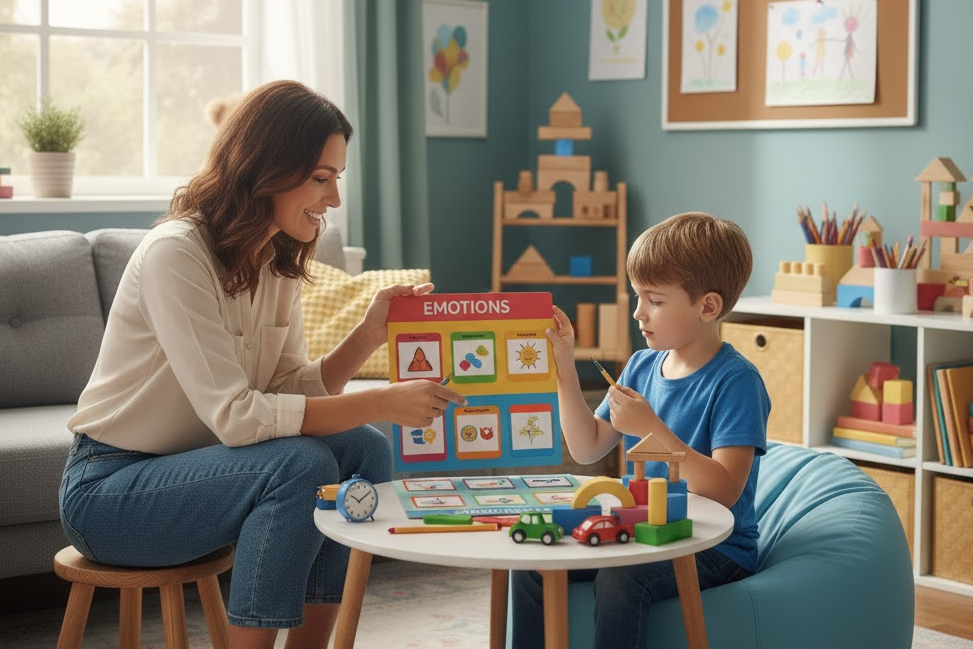
To a child, play is their first language. While adults use words to express complex feelings, children use toys, art, and movement. Play Therapy is a research-based clinical approach that allows children to “play out” their internal hidden stresses, traumas, and anxieties in a safe, structured environment.
Why Play?
Children often lack the cognitive and verbal complexity to explain why they feel sad, angry, or scared. In a dedicated playroom, toys act as the child’s words and play becomes their speech.
Through this process, a trained therapist can:
Observe patterns of behavior and emotional expression.
Identify the root causes of a child’s distress.
Intervene by teaching new coping mechanisms through the medium of play.
Our Play Therapy Modalities
We utilize both Directive (therapist-led) and Non-Directive (child-led) techniques depending on the specific needs of your child:
| Technique | How it Helps | Examples |
| Sand Tray Therapy | Creating “worlds” to represent internal conflicts. | Using figurines to act out family dynamics. |
| Therapeutic Storytelling | Externalizing problems through characters. | Reading or creating stories about a “brave cub.” |
| Role-Play & Puppetry | Practicing social skills and empathy. | Using puppets to “practice” a scary school event. |
| Art & Sensory Play | Releasing tension and expressing “big” emotions. | Finger painting, clay modeling, or “slime” therapy. |
When is Play Therapy Recommended?
Play Therapy is highly effective for children (typically ages 3–12) experiencing:
Life Transitions: Divorce, moving house, or the birth of a sibling.
Trauma & Grief: Loss of a loved one, accidents, or illness.
Social Struggles: Bullying, extreme shyness, or difficulty making friends.
Behavioral Issues: Aggression, “acting out,” or bedwetting.
Neurodiversity: Support for ADHD or Autism Spectrum Disorder.
The Role of the Parent
You are the most important person in your child’s life. While the “play” happens between the child and the therapist, parental involvement is a core part of our process.
We provide regular “check-in” sessions to:
Discuss progress and themes observed in the playroom.
Provide you with “At-Home Tools” to support your child’s emotional growth.
Help you understand the “language” of your child’s play.
The Goal: We aren’t just teaching your child how to play; we are helping them process the world so they can return to the joy of being a child.